
Disabled residents and families with a child under three would lose 100% council tax support in April 2027 and pay £180 to £365 at Band D. Cabinet meets Monday.
About 7,100 Wandsworth households who pay no council tax at all would get a bill from April 2027. They include disabled residents and families with a child under three.
The change is in a report to the council’s Cabinet, which meets at 6pm on Monday 12 October. Cabinet is being asked to put it out to public consultation. Nothing is decided yet, and a final scheme would go back to Cabinet in January 2027 before Full Council votes. (Cabinet Paper 26-241)
The council announced the plan on Friday as “a better, fairer approach”. Its release says more low-income households would get help and “everyone makes a contribution”. (Wandsworth Council, 9 October 2026) The Cabinet paper puts numbers on both halves of that.
Who pays nothing now, and who would
Council Tax Reduction is the discount low-income households get on their bill. Pensioners’ rules are set nationally and do not change. The council sets its own scheme for everyone of working age, and about 9,650 households claim it.
Since April 2024 the scheme has had a category the paper calls WA1. It gives a 100% discount, so the bill is zero, to working-age households where:
- the claimant or partner gets any disability benefit: Disability Living Allowance, Personal Independence Payment, Armed Forces Independence Payment or Attendance Allowance
- or there is a child under three in the home
The paper says 7,102 households are in that category, 74% of everyone of working age on the scheme. The recommended option abolishes it. Those households would be moved into the other categories, mostly the one for out-of-work households without children, which today gets a 75% discount.
What it would cost them
The council’s recommended version, which the paper calls Option 3, phases the change in over four years. For households now on full support, the discount drops to 82% or 91% in the first year, then falls each year to 2030/31.
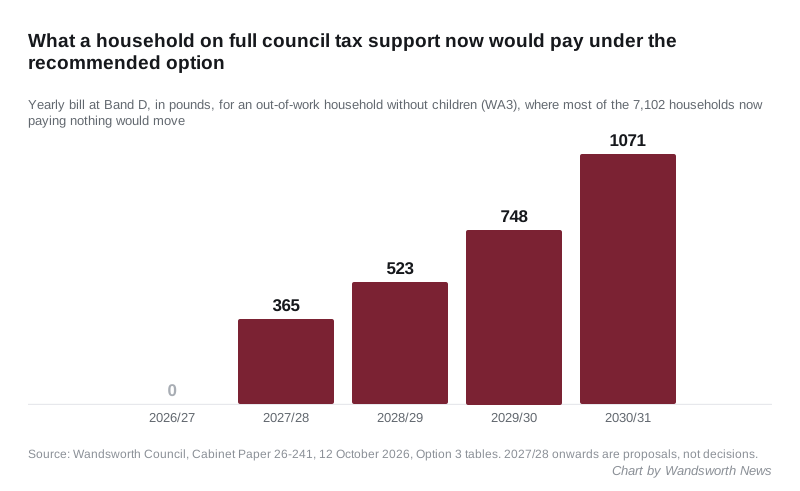
For a Band D home, the paper’s tables give these yearly bills under Option 3:
| Household type | Now | 2027/28 | 2030/31 |
|---|---|---|---|
| Full support now (WA1), moving to out of work without children | £0 | £365 | £1,071 |
| Full support now, moving to out of work with children | £0 | £180 | £988 |
| Out of work with children (WA2) | £102 | £180 | £988 |
| Out of work without children (WA3) | £255 | £365 | £1,071 |
| No support (full Band D bill) | £1,020 | £1,979 | £2,059 |
The paper puts the average rise for a former WA1 household at £308.56 in 2027/28 at Band D. By 2030/31, the discount for the main out-of-work groups would be between 48% and 52%, down from 75% to 100% today.
Most people on the scheme do not live in Band D homes. The paper says 85% are in Bands A to D, and Band C is the most common. Bills in lower bands are smaller. For a Band C home, an out-of-work household without children would pay £325 in 2027/28 and £952 in 2030/31.
Who would gain
Working households earning just above the current limits get nothing at the moment. The paper adds four new income bands to catch some of them:
| Household | Current earnings limit | New band |
|---|---|---|
| Working, one or two children | under £250 | £250 to £350 |
| Working, three or more children | under £275 | £275 to £350 |
| Working, single person | under £125 | £125 to £200 |
| Working, couple | under £160 | £160 to £250 |
The paper gives the limits as net earned income and does not say how many households will qualify. Its costings assume the working caseload grows by half. Those households would get a 40% discount in 2027/28, falling to between 8% and 10% by 2030/31.
The paper also says about 2,548 households, the 26% of working-age claimants outside WA1, would get a bigger percentage discount in the first year than they do now.
Why the council says it has to change
The council’s Spending Review plans a Band D bill of £1,979 in 2027/28, against £1,020 now. We covered that rise and the funding row behind it. The discount is a percentage of the bill, so when the bill nearly doubles, so does the cost of the discount.
The paper’s figures for the working-age scheme are:
- £6.9 million in 2026/27
- £13.7 million in 2027/28 if nothing changes, rising to £14.3 million by 2030/31
- £12.5 million in 2027/28 under Option 3, falling to £7.1 million by 2030/31
A faster cut, Option 2, would have cost £3.4 million less over four years. The paper rejects it because former WA1 households would face an average rise of £419.96 in the first year.
How it compares with other London boroughs
The paper lists every London scheme. At the moment Wandsworth’s vulnerable households pay nothing, and the lowest bill in its main scheme is £102.82 at Band D. Of the other 17 income-banded boroughs, at Band D in 2026/27:
- Islington, Ealing, Camden, Enfield, Richmond and Croydon also give vulnerable households a 100% discount
- Lambeth asks vulnerable households to pay £542.48
- Barnet asks £639.78, and Brent £782.34
The 15 boroughs that still means-test, including Westminster, Southwark, Merton and Lewisham, work each award out from the household’s full income. Several of them can still reduce a bill to nothing.
Wandsworth also has the lowest Band D bill of any council on the list, at £1,020.35. The paper argues that even after 2030/31, Wandsworth households on the scheme would pay less than in many other boroughs.
What the council’s own equality assessment says
The equality assessment attached to the paper says removing WA1 is “likely to have a particularly significant impact on disabled residents, families with very young children, carers, single parents” and households already in hardship. It also says the rises get bigger each year, and that the steepest come in the fourth.
The paper warns that cutting support “may impact on collection rates, levels of debt and result in increased demand for welfare, debt advice and discretionary support”. It lists the mitigation as the four-year phasing, clear communication, targeted advice and discretionary help.
What it means for you
- If you get a disability benefit or have a child under three, and pay no council tax now: this is aimed at you. On the plan as it stands, you would get your first bill in April 2027.
- If you already pay part of your bill under the scheme: your percentage discount would rise slightly in 2027/28, then fall each year to 2030/31. Your bill still goes up in 2027/28, because the full charge nearly doubles.
- If you work and earn just over the current limits: you may qualify for the first time. Check the council’s Council Tax Reduction eligibility page once the new scheme is published.
- If you are of pension age: nothing changes.
The council says the consultation “will be launched shortly”. The paper says the proposals must be published for at least four weeks. Cabinet’s meeting on Monday is webcast from the meeting page. For the bands and what each one pays now, see our Wandsworth council tax bands page.
Sources
- Review of the Council Tax Reduction Scheme, Cabinet Paper 26-241 (Wandsworth Council, 12 October 2026), including Appendices A to I: the current scheme, caseload, London benchmarking, option costings, bills by band and the equality assessment.
- Cabinet, 12 October 2026: agenda and documents (Wandsworth Council).
- Council Tax Reduction Scheme: a better, fairer approach (Wandsworth Council, 9 October 2026).
Have your say